

BE SLOW, LET IT FLOW
THE BRIDGE BETWEEN IDEAS AND CRAFTSMANSHIP
May 15 - 17, 2026 | 3:00 PM - 8:00 PM
Auditorium, Ex Centrale del Latte, Via Medici 96a, 36100 Vicenza (VI)
FREE ADMISSION
Supported by the Municipality of Vicenza and the Ex Centrale del Latte
OUR PARTNERS

Recycling, sustainability, and 3D prototyping of furniture and collectible design
BE Slow, Let It Flow is an interactive exhibition workshop curated by BE at gallery, in collaboration with BE at home - Design Consulting. The event is based on the concept of slow design, which is defined as a conscious and participatory creation process where time, materials, and relationships become integral parts of the final result. By creating a bridge between creative ideas and artisanal skills, BE at gallery transforms the vision of BE at home into a tangible experience. The exhibition is divided into several stations:
Circular Sustainability:
A live demonstration of the complete recycling process using a pultrusion machine, which is a tool that transforms plastic bottles (PET) into filament (rPET) for the 3D printing of furniture and collectible design models.
3D Printing Technology:
Live scale reproductions of unique furniture and collectibles, utilizing advanced 3D printing technology that processes recycled materials like rPET and ecoPLA.
Scale Prototypes Expo:
An exhibition of unique furniture design pieces created by international artists who collaborated with BE at gallery and BE at home. These prototypes could later be reproduced on a large scale using various materials, such as stone, wood, metal, and glass.
What is a pultrusion machine and how does it revolutionize Recycling?
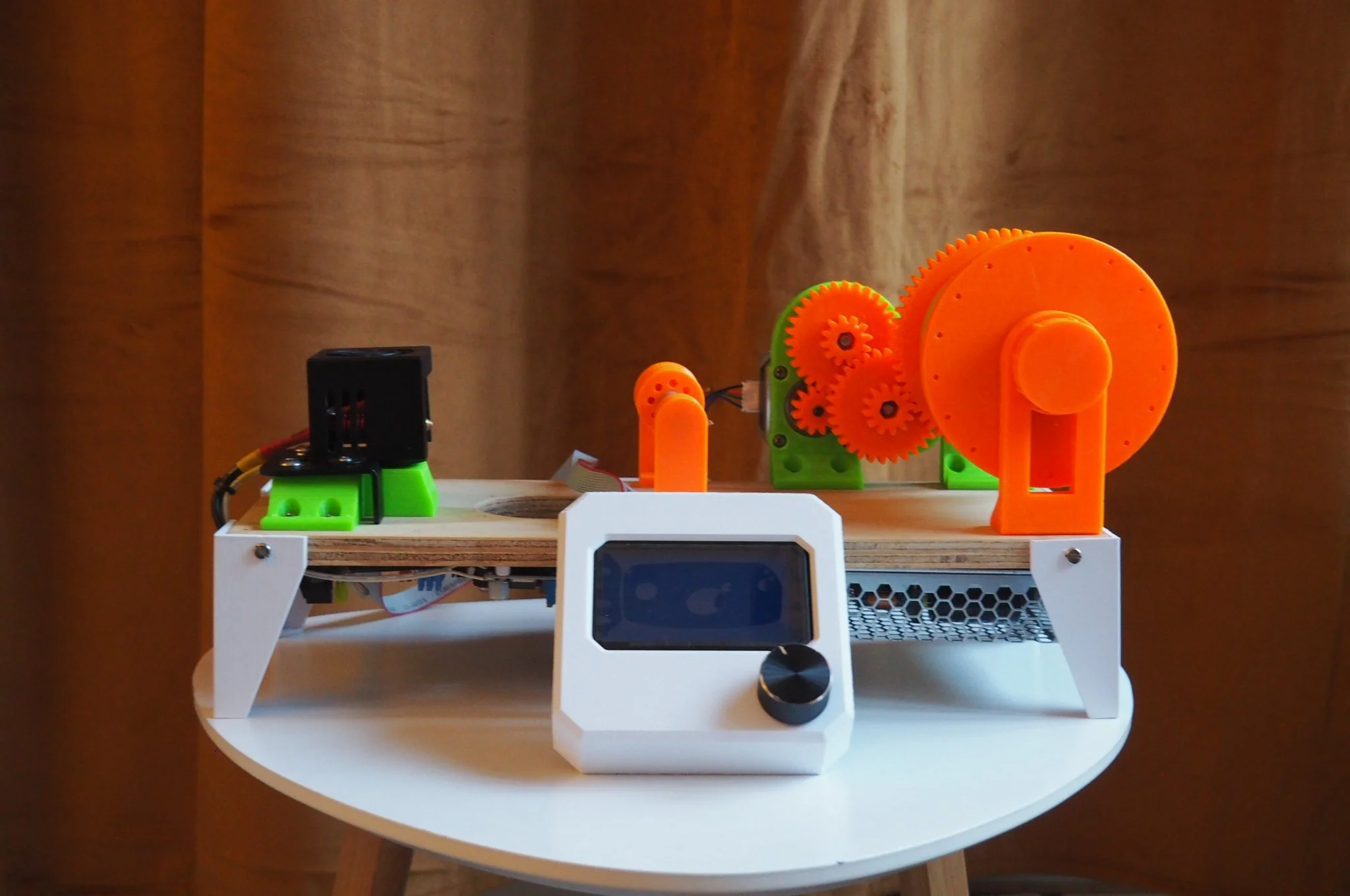
Since we aim for total sustainability, we could not limit ourselves to standard materials. A pultrusion machine is an innovative device that transforms common plastic bottles (PET) into valuable raw materials. During the process, the bottle is cut into a long, thin, continuous strip, which is then pulled (pultruded) through a heated nozzle. The result is a 100% recycled 3D printer filament that is strong and ready to use. The true excellence of this project lies in its development, as the pultrusion machine you will see in action is not a standard industrial product. It was entirely designed, engineered, and built from scratch by the technical team at BE at home, resulting in an in-house engineering masterpiece that demonstrates how environmental commitment can drive technological innovation.
What is a 3D Printer? The Zero-Mile Factory of the Future
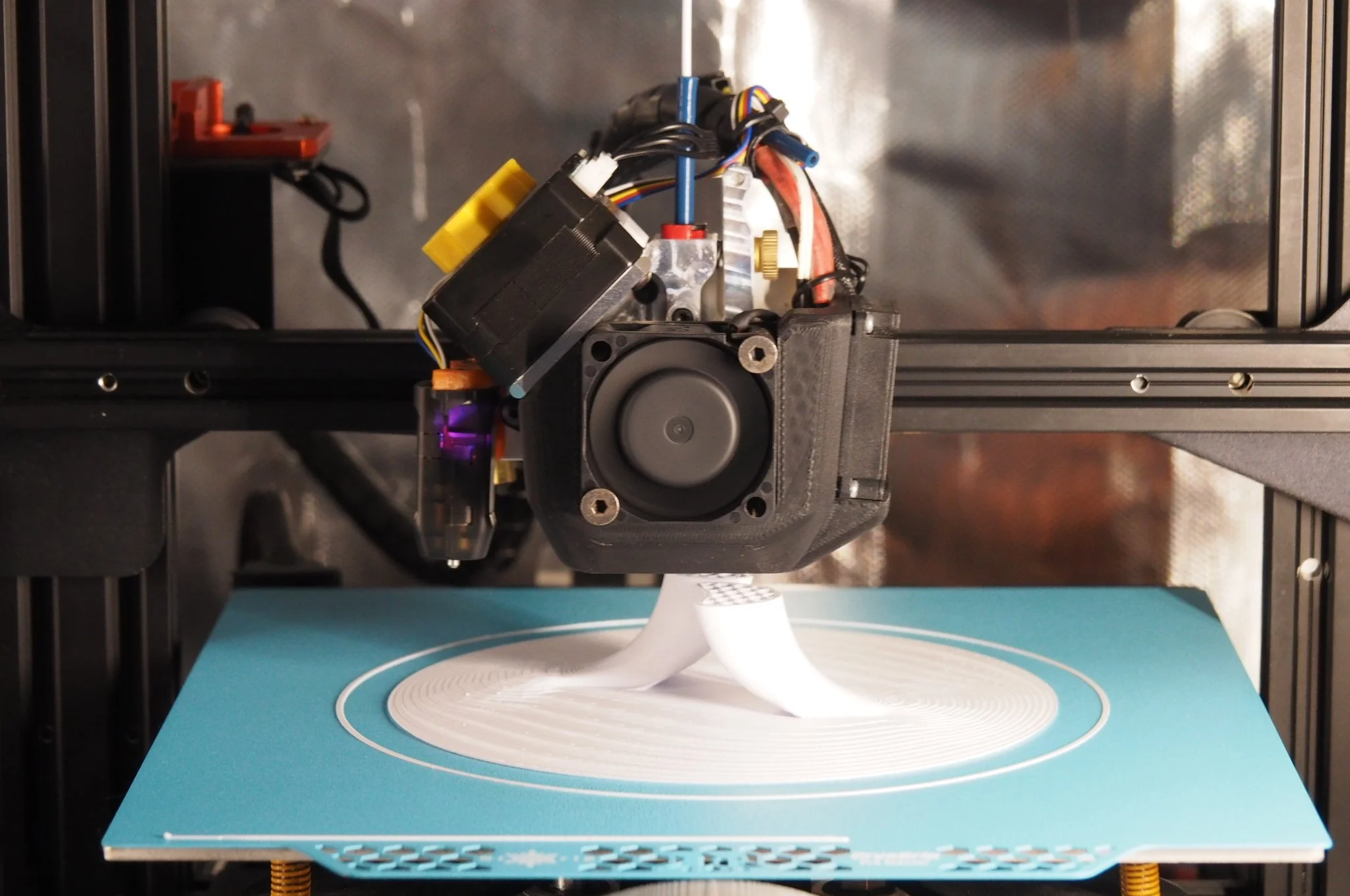
Because moving from an idea to production in furniture design is a delicate and expensive step, rapid 3D prototyping plays a crucial role. BE at home - Design Consulting creates scale models before final production for several key reasons:
Aesthetic and Ergonomic Validation: It allows designers and clients to physically evaluate the proportions, volumes, and harmony of the object within a space.
Waste Reduction: Discovering a design flaw on a small scale model saves tons of material and thousands of euros compared to making a mistake on the final product.
Mechanical Testing: Even in miniature, it is possible to check the joints, stability, and overall functionality of the furniture piece.
Faster Market Launch: By speeding up decision-making, 3D printed prototypes optimize the entire product life cycle, perfectly aligning with the slow and eco-friendly philosophy.
The Importance of Prototyping in Furniture Design
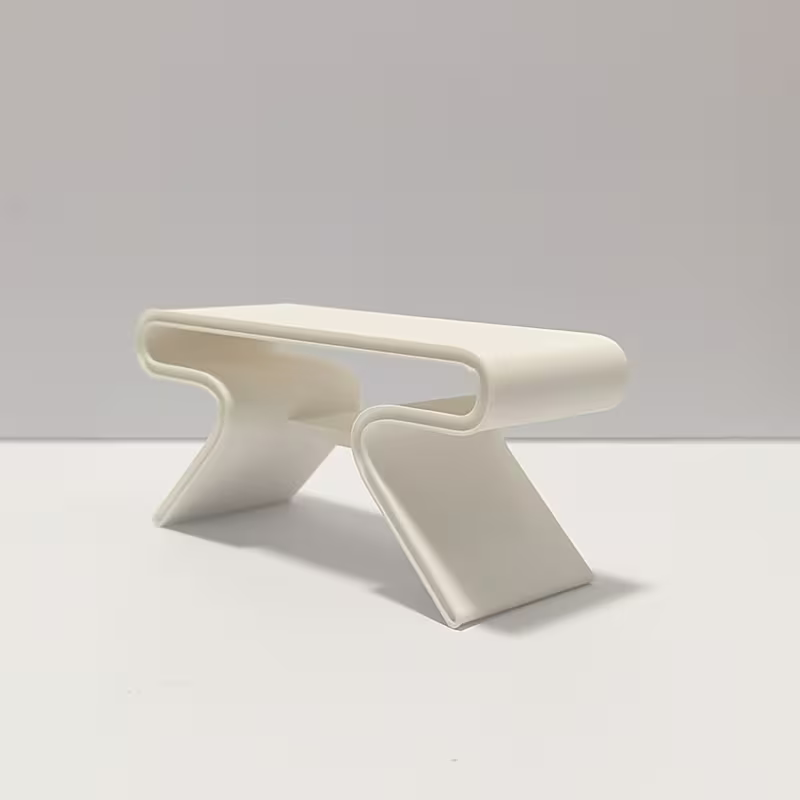
A 3D printer is the beating heart of additive manufacturing. Unlike traditional production methods that subtract material and create waste, 3D printing builds objects layer by layer starting from a digital model.
In the context of this event, the 3D printer melts the ecological filament created by our pultrusion machine and deposits it with extreme precision. Because this technology allows us to create complex geometric shapes, we can produce scale models of furniture and exclusive collectibles while reducing waste and transport emissions, thereby promoting a truly sustainable design.
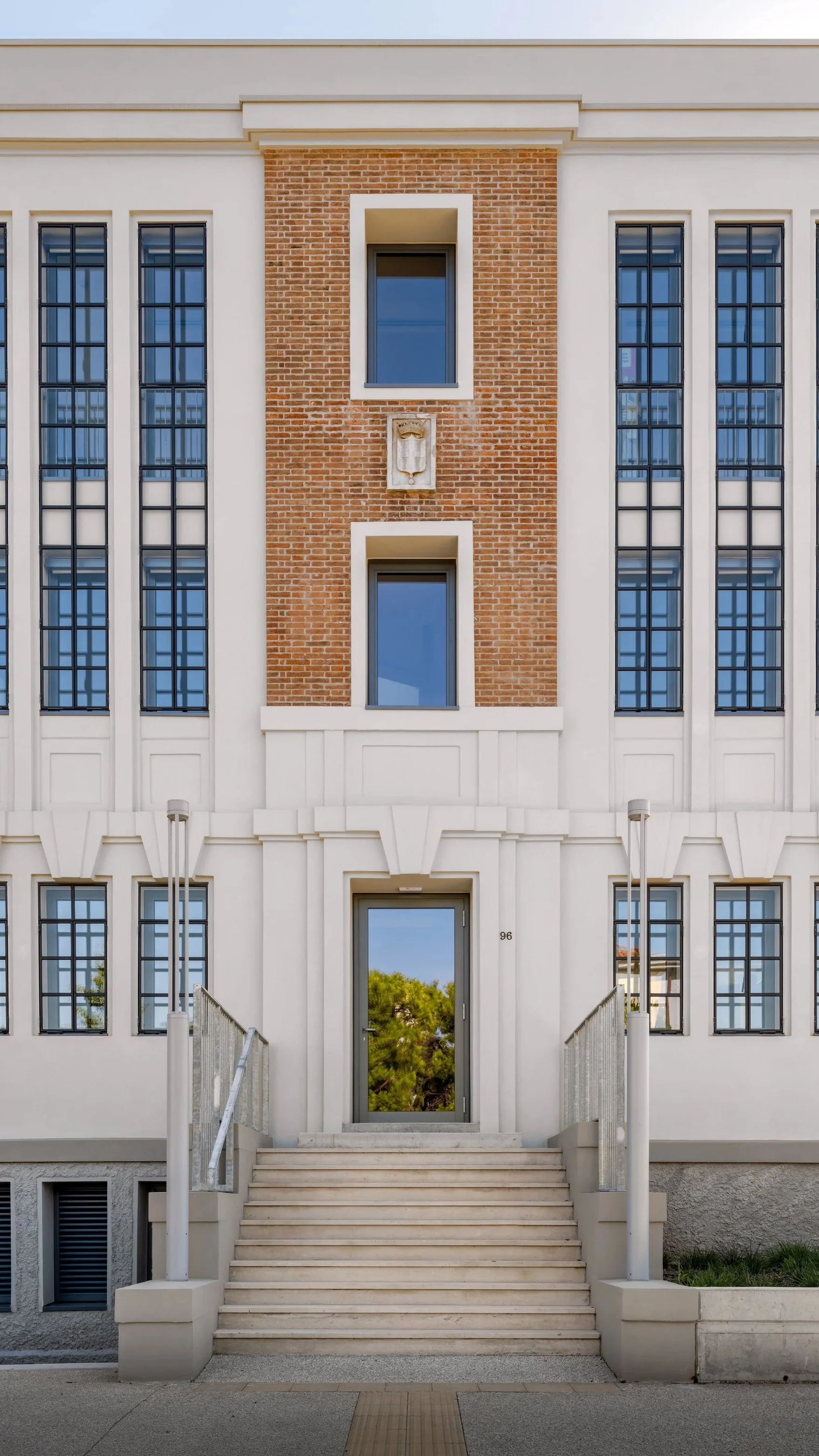
The Ex Centrale del Latte as an Exhibition Space
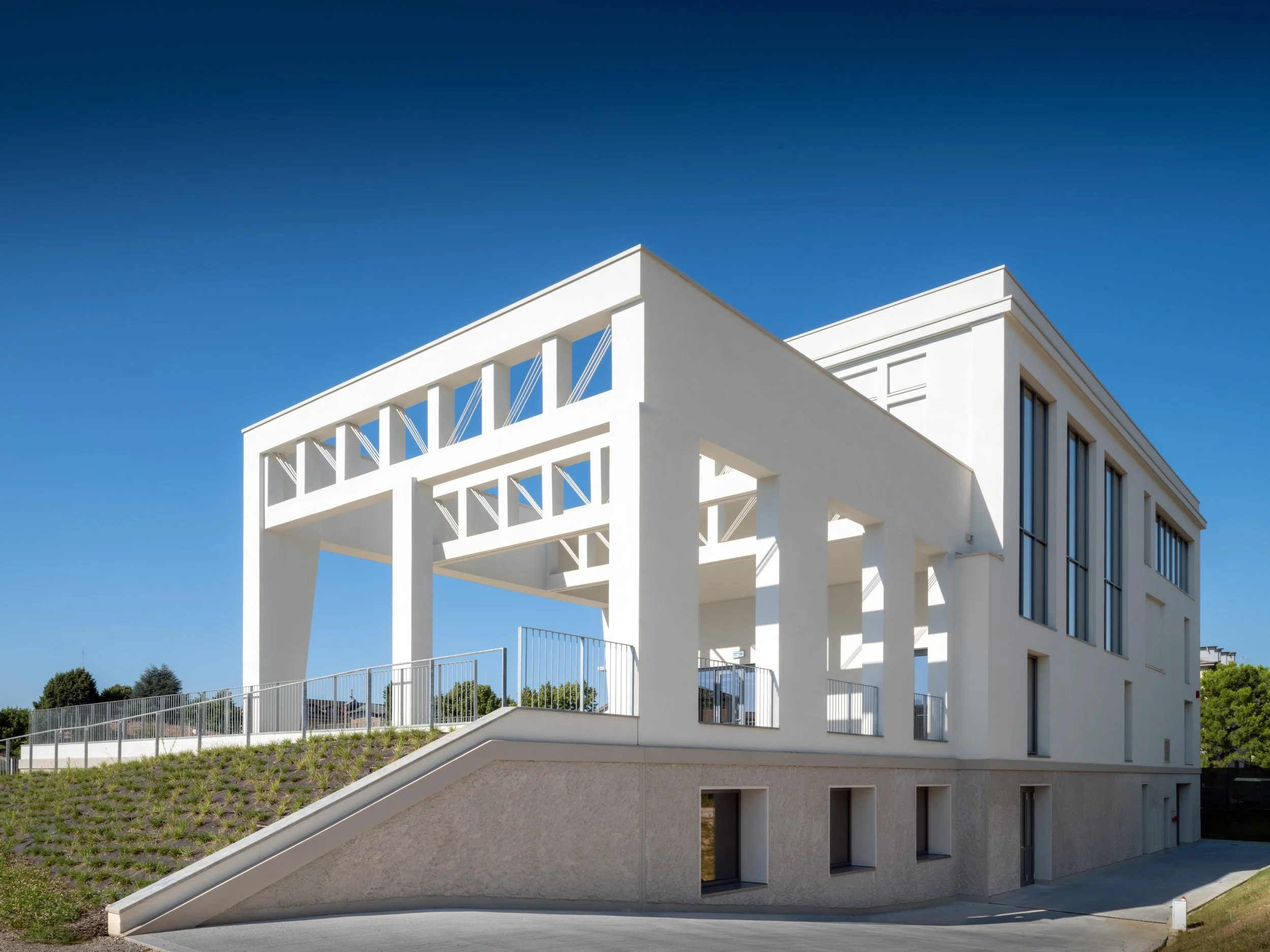
Located in the San Bortolo neighborhood, the Ex Centrale del Latte of Vicenza is a historical industrial archaeology building that operated from 1931 to 2008, before being converted into a civic and cultural center. Since the Municipality of Vicenza recently redeveloped and reopened the structure, it now hosts spaces for associations, an urban park, an auditorium, and contemporary art exhibitions, becoming a vibrant new meeting place for the citizens.